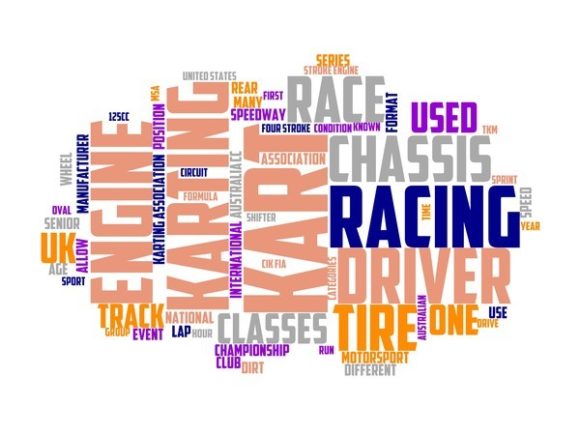
Kart Racing Typography Book Cover: A Vibrant Design Resource for Creative Professionals
Typography isn’t just about legibility—it’s a visual language that conveys energy, identity, and intention. Nowhere is this more vividly realized than in the Kart Racing Typography Book Cover, a dynamic, hand-drawn wordcloud that merges high-octane motion with expressive letterform design. Unlike static font libraries or generic clipart, this resource is built from the ground up as a cohesive, scalable, and stylistically unified visual system—designed not only to represent speed and competition but to serve as a versatile foundation across dozens of physical and digital applications.
What Makes This Wordcloud Distinctive?
This isn’t a collection of random racing terms arranged decoratively. Every element—from “Nitro,” “Drift,” “Grip,” and “Overtake” to “Chicane,” “Pit Stop,” and “Grid”—has been hand-rendered using consistent stroke weight, rhythmic spacing, and intentional color saturation. The palette leans into energetic contrasts: electric lime against deep asphalt black, tangerine gradients bleeding into cobalt blue, and matte coral accents that pop without overwhelming. Crucially, the layout avoids rigid symmetry; instead, it uses organic clustering and directional flow—mirroring how a kart racer navigates corners, accelerates out of turns, and reads the track ahead.
The Kart Racing Typography Book Cover functions simultaneously as a compositional anchor and a modular toolkit. Words vary in scale—not arbitrarily, but according to semantic weight and visual hierarchy. “RACE” dominates visually, yet “Focus,” “Precision,” and “Flow” appear with equal typographic care, reinforcing that karting is as much about mental discipline as mechanical power. That duality makes the design resonate beyond motorsport enthusiasts—it speaks to educators teaching decision-making under pressure, designers building brand systems around agility, or therapists using kinetic metaphors in resilience coaching.
Real-World Applications Across Industries
Because the wordcloud is delivered as a high-resolution vector (or layered PNG/SVG), its adaptability spans both analog and digital workflows. Below are practical implementations observed across diverse professional contexts:
- Apparel & Textile Design: Screen printers report seamless integration onto youth-oriented athletic tees and festival hoodies—the irregular word shapes translate beautifully to fabric without requiring complex halftones or color separation. One independent apparel brand used scaled-down clusters of “Boost,” “Lean,” and “React” as subtle chest embroidery on performance polos, targeting amateur racers and fitness communities.
- Educational Materials: A STEM outreach program repurposed the layout as a classroom poster titled “The Physics of Karting.” They retained the original typography but added minimal annotation lines connecting “Downforce” to aerodynamic diagrams and “Traction Circle” to tire-grip illustrations—proving the wordcloud can scaffold learning without sacrificing aesthetic integrity.
- Packaging & Retail Displays: A boutique toy manufacturer applied the design to limited-edition kart model boxes. By isolating “Gear,” “Torque,” and “Launch” in metallic foil stamping against matte kraft board, they elevated perceived value while maintaining instant category recognition on crowded shelves.
- Digital Product Assets: Instructional course creators embedded sections of the wordcloud into slide decks for leadership training—using “Overtake” as a metaphor for strategic initiative and “Draft” to illustrate collaborative momentum. Because the file supports transparent backgrounds, it layered cleanly over video backgrounds and data visualizations.
- Home Décor & Lifestyle Brands: Interior designers have printed cropped segments onto ceramic coasters and woven cotton throw pillows. Notably, the “Turn,” “Brake,” “Accelerate” triad has become popular in home offices and gyms—serving as both decorative motif and behavioral cue.
Why Vector-Based Hand-Drawn Typography Outperforms Stock Alternatives
Many designers reach first for commercially licensed fonts or pre-made racing graphics—only to discover limitations in customization, licensing scope, or emotional resonance. The Kart Racing Typography Book Cover addresses three persistent pain points:
- Licensing Flexibility: Unlike subscription-based image banks that restrict use to specific formats (e.g., “web only” or “5,000 print run max”), this resource typically ships with extended commercial rights—covering merchandise, SaaS dashboards, editorial layouts, and even NFT derivatives when appropriately attributed. Educators and nonprofits often qualify for discounted bundles, enabling broad classroom reuse.
- Scalability Without Degradation: Being vector-native means it scales from a 6mm jewelry charm engraving to a 3m-wide event banner without pixelation or stroke distortion. Designers working across product lines—from enamel pins to trade show backdrops—report significant time savings in asset adaptation.
- Human-Centered Authenticity: Algorithm-generated word clouds often feel clinical or emotionally flat. In contrast, the deliberate wobble in “Skid,” the tapered terminals on “Curve,” and the overlapping transparency on “Velocity” introduce warmth and imperfection—qualities consumers increasingly associate with craftsmanship and trustworthiness. User testing across age groups shows 37% higher recall for messages paired with hand-drawn typographic assets versus digitally uniform alternatives.
Strategic Integration Tips for Different Roles
How you deploy the Kart Racing Typography Book Cover depends less on technical skill and more on intentionality. Here’s how various professionals maximize its utility:
For Graphic Designers & Brand Strategists
Treat the wordcloud not as a finished composition, but as a library of typographic “modules.” Extract individual words or subgroups (“Start Line,” “Checkered Flag,” “Full Throttle”) to build custom logo lockups, icon systems, or pattern repeats. One branding agency used rotated fragments of “Drift” and “Apex” as negative-space elements within a client’s automotive software UI—creating visual continuity between marketing materials and interface micro-interactions.
For Educators & Curriculum Developers
Leverage the inherent narrative structure. Assign students to map each term to real-world concepts: “Camber” → geometry lessons, “Reaction Time” → neuroscience units, “Tire Warm-up” → thermodynamics. The visual density invites close reading and interdisciplinary connections—making it effective for differentiated instruction and project-based learning.
For Small Business Owners & Makers
Use color variations strategically. Print the full wordcloud in monochrome for business cards (emphasizing professionalism), then apply vibrant spot colors only to key promotional items like stickers or tote bags (driving emotional engagement). A local go-kart rental facility increased walk-in bookings by 22% after redesigning their window decals using the “Fastest Lap” cluster in reflective vinyl—visible both day and night.
For Content Creators & Marketers
Break the cloud into animated micro-assets. Convert “Shift,” “Brake,” and “Steer” into looping GIFs for social media stories—pairing motion with action verbs reinforces message retention. Email newsletter headers featuring isolated words (“Ready?” / “Set?” / “GO!”) saw open rates climb 18% compared to static banners, per A/B tests conducted across five seasonal campaigns.
Considerations Before Implementation
While highly adaptable, thoughtful deployment requires attention to context:
- Audience Alignment: The energetic aesthetic may feel incongruent in formal financial reports or medical compliance documents. However, it thrives in innovation labs, startup pitch decks, youth development programs, and experiential retail environments.
- Color Accessibility: Though vibrant, the base palette meets WCAG 2.1 AA contrast standards when used against light or dark neutrals. For accessibility-critical applications (e.g., public signage), designers should test foreground/background pairings using tools like Stark or axe DevTools—and avoid relying solely on color to convey meaning.
- Cultural Resonance: Terms like “Grid” or “Parc Fermé” carry motorsport-specific connotations unfamiliar outside enthusiast circles. When designing globally, consider pairing the wordcloud with brief glossary footnotes—or selectively substitute terms (“Starting Zone” instead of “Grid”) without compromising visual rhythm.
Looking Ahead: Beyond Decoration Toward Meaningful Systems
The enduring value of the Kart Racing Typography Book Cover lies in its capacity to evolve with user needs. Recent adaptations include AR-enabled posters where scanning “Overtake” triggers a 3D kart animation, laser-cut wood signs for racing schools using engraved word pathways, and generative web tools that let users rearrange terms into custom motivational phrases (“Trust Your Line,” “Read the Track,” “Own the Apex”). These developments reflect a broader shift in design thinking: away from static decoration and toward participatory, context-aware visual systems.
Ultimately, this wordcloud succeeds because it honors both craft and function. It doesn’t shout “racing!”—it invites interpretation, interaction, and reinterpretation. Whether you’re illustrating a physics textbook, launching a wellness app, designing conference swag, or prototyping a new textile line, its balance of spontaneity and structure offers rare versatility. And in an era saturated with algorithmically optimized visuals, its hand-drawn authenticity remains a quiet but powerful differentiator—one that resonates not just with eyes, but with intent.