Kite Buggy Typography Book Cover: A Hand-Drawn Word Cloud for Versatile Creative Use
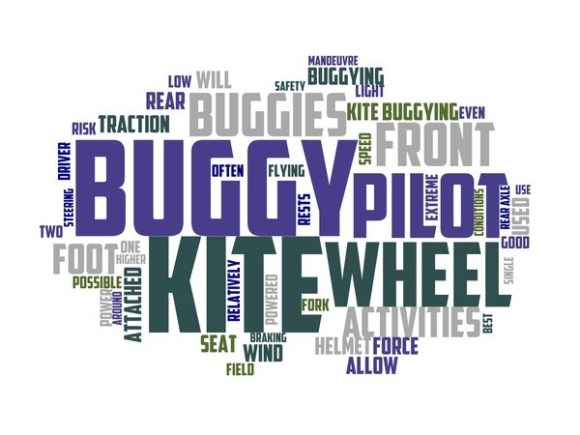
The Kite Buggy Typography Book Cover is not a conventional book cover in the traditional publishing sense. Rather, it’s a standalone typographic design asset—a vibrant, hand-drawn word cloud composed of carefully curated, inspirational words rendered in playful yet balanced letterforms. Its name evokes motion, lightness, and creative freedom—qualities reflected in its visual rhythm and organic line work. Unlike algorithmically generated word clouds or rigid vector-based typography packs, this design emphasizes human touch: subtle variations in stroke weight, slight irregularities in spacing, and a warm, inclusive color palette that feels intentional rather than decorative.
What Sets Kite Buggy Typography Apart from Other Word Cloud Assets
Most word cloud resources fall into two broad categories: data-driven visualizations (used for analytics or presentations) and decorative typography bundles (often mass-produced, digitally uniform, or overly stylized). The Kite Buggy Typography Book Cover occupies a distinct middle ground—it’s designed for aesthetic application, not data representation, yet avoids the sterility of machine-perfect fonts or the visual noise of over-saturated clipart-style collections.
Its hand-drawn origin means each word carries expressive nuance—“courage” might tilt slightly upward; “wander” curves like a breeze; “create” sits with grounded confidence. This isn’t just ornamentation; it’s typographic storytelling. That distinction matters when evaluating assets for physical or print-based projects where texture, authenticity, and tactile resonance influence perception—think screen-printed apparel, letterpress stationery, or embroidered textile labels.
Fitness for Purpose: Where This Design Excels
The Kite Buggy Typography Book Cover shines in contexts where warmth, approachability, and handmade credibility are strategic advantages. It’s especially well-suited for:
- Small-batch product design: Ideal for indie makers printing on tote bags, ceramic mugs, or linen pillow covers—its irregularity reads as artisanal, not inconsistent.
- Print-on-demand publishing: Works effectively as a cover or interior motif for self-published journals, mindfulness workbooks, or creative prompt books where tone and voice matter as much as content.
- Event and brand collateral: Scales gracefully across invitations, program covers, and banners—its layered composition invites lingering attention without overwhelming hierarchy.
- Educational and therapeutic materials: Used in classroom posters or wellness printables, its inclusive vocabulary (“breathe,” “grow,” “listen,” “pause”) supports intentionality without prescriptive messaging.
Unlike monoline sans-serif word clouds—which can feel clinical—or highly ornate script-based alternatives—which risk legibility loss at smaller sizes—the Kite Buggy Typography Book Cover balances personality with practicality. Its color palette is deliberately harmonious but not restrictive: it converts cleanly to grayscale for embroidery or single-color screen printing, and individual words can be isolated and recolored without breaking visual cohesion.
Tradeoffs and Practical Considerations
No design asset is universally optimal—and understanding limitations helps avoid misalignment. The Kite Buggy Typography Book Cover prioritizes expressive integrity over rigid scalability. At very small sizes (under 12 pt in print, or below 150 px on screen), fine details—like delicate crossbars or tapered terminals—may soften or merge. That doesn’t preclude use on business cards or stickers, but it does mean careful proofing at final output size is advisable.
It’s also intentionally non-modular. You won’t find separate SVG files for each word, nor layered PSDs with editable text layers. This reflects its origin as a unified composition—not a toolkit. Users seeking maximum flexibility for rapid recombination (e.g., swapping out “dream” for “focus” in dozens of layouts) may find other typography bundles more efficient. Similarly, those requiring strict WCAG-compliant contrast ratios for digital accessibility should verify color pairings against their intended background—though its default palette meets AA standards on light neutrals.
Another consideration: licensing scope. While broad—covering apparel, packaging, digital products, and promotional materials—it’s not intended for resale as a standalone font file or as the sole visual component of a logo used by third-party brands without attribution review. Clarity here prevents downstream complications, especially for designers working with clients across industries.
Comparing Approaches: When to Choose This vs. Alternatives
Suppose you’re designing a capsule collection of affirmation-based apparel for a yoga studio. A generative word cloud tool might produce something statistically dense but emotionally flat; a premium serif font pack offers typographic rigor but little inherent thematic cohesion. The Kite Buggy Typography Book Cover, by contrast, delivers both semantic relevance and stylistic unity out of the box—reducing time spent curating vocabulary and adjusting kerning.
For a children’s activity book, however, its gentle complexity may be less suitable than bold, high-contrast stencil fonts optimized for early readers. Likewise, a corporate annual report calling for authoritative gravitas would likely benefit more from restrained editorial typography than expressive wordplay—even beautifully executed.
The decision hinges less on “better” or “worse” and more on alignment with three factors: audience expectation, production context, and conceptual intent. If your goal is to signal care, curiosity, and human-centered creation—whether on a handmade greeting card or the spine of a poetry chapbook—this design supports that narrative cohesively. If your priority is speed, strict consistency across hundreds of variants, or integration into automated design systems, other resources may better serve that workflow.
Real-World Application Notes
Designers report successful adaptation of the Kite Buggy Typography Book Cover across varied substrates: heat-transfer vinyl on organic cotton tees retains its sketch-like charm; foil-stamped onto matte paper stock, it gains quiet luxury; when laser-cut from birch plywood for wall art, its contours translate with surprising fidelity. One textile artist used it as an underlay for free-motion embroidery, tracing key words before stitching over them in variegated thread—a technique that honored the original line work while adding dimension.
In digital use, it functions well as a hero section background for wellness blogs or creative course sales pages—especially when paired with ample whitespace and minimal supporting type. Its density provides visual interest without competing with primary calls-to-action. For e-book covers, placing it behind a centered title (with subtle opacity reduction) creates depth while preserving readability.
Making an Informed Choice
Ultimately, the Kite Buggy Typography Book Cover is a considered artifact—not a utility. It rewards thoughtful integration over drop-in convenience. Its value emerges most clearly when matched with projects where authenticity, emotional resonance, and tactile sensibility carry measurable impact: a boutique gift shop’s seasonal packaging, a therapist’s waiting-room poster, a teacher’s classroom motto display, or an author’s debut memoir cover aiming to convey vulnerability and resilience in equal measure.
If your work regularly bridges craft and communication—if you prioritize meaning alongside method—this asset offers more than decoration. It offers a shared visual language rooted in generosity, play, and quiet intention. And in a landscape increasingly saturated with synthetic precision, that human signature remains both rare and resonant.