Immunology Typography Wallpaper: Where Science, Design, and Purposeful Creativity Converge
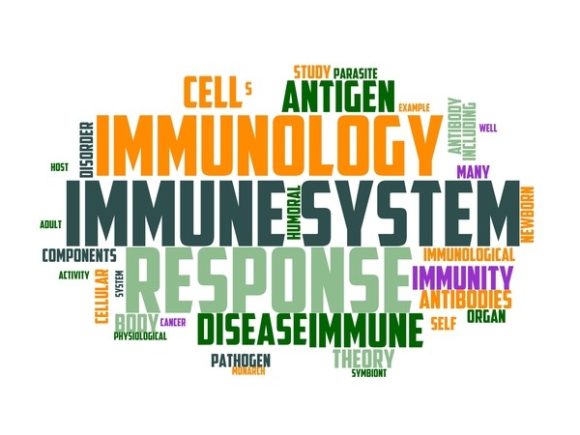
In today’s visually saturated marketplace—where attention is scarce and authenticity is currency—designers, entrepreneurs, and content creators are increasingly turning to assets that do more than look good. They seek meaning, resonance, and narrative depth. Enter the Immunology Typography Wallpaper: a distinctive, hand-drawn wordcloud that transforms complex scientific language into vibrant, emotionally intelligent visual storytelling. More than decorative typography, it’s a bridge between biomedical literacy and expressive design—a tool engineered for impact across apparel, print, digital media, and experiential branding.
What Is Immunology Typography Wallpaper—Really?
The Immunology Typography Wallpaper is not wallpaper in the traditional sense. It’s a high-resolution, scalable vector-based wordcloud composed entirely of immunology-related terms—antibody, cytokine, T-cell, antigen presentation, immune tolerance, inflammation, vaccination, and dozens more—arranged organically, with deliberate variation in size, weight, orientation, and color. Each term is hand-lettered using expressive, human-scale strokes—not algorithmically generated or AI-smoothed. The result is warmth, texture, and intentionality: science rendered with soul.
Unlike clinical illustrations or sterile infographics, this wordcloud invites engagement through familiarity and discovery. A biologist might spot HLA-DR nestled beside memory B cell; a patient advocate may pause at autoimmunity and resilience; a student sees vocabulary they’re learning, now made tangible. Its versatility stems from its dual nature: it’s both educational scaffolding and aesthetic asset. That duality powers its utility across industries—from biotech marketing campaigns to wellness apparel lines and university science outreach programs.
A Reflection of Evolving Creative and Consumer Expectations
This isn’t just another trend. The rise of the Immunology Typography Wallpaper mirrors three interlocking shifts in how professionals create, consumers connect, and brands communicate:
- Science Literacy as Shared Cultural Capital: Public interest in immunology surged during the pandemic—and hasn’t receded. People no longer treat terms like adaptive immunity or interferon response as jargon; they’re part of everyday discourse. Designers responding to this shift aren’t simplifying science—they’re honoring its complexity while making it accessible. The wordcloud does exactly that: it assumes intelligence, invites curiosity, and rewards closer looking.
- The Human-Centered Design Imperative: Automation and AI tools have flooded creative workflows with speed—but often at the cost of nuance and emotional resonance. Clients and collaborators now prioritize work that feels *made*, not *generated*. Hand-drawn elements signal care, craft, and human judgment—qualities increasingly associated with trustworthiness. When a healthcare startup uses this wallpaper on conference banners or lab-coat embroidery, it communicates commitment—not just to innovation, but to people-first values.
- Multi-Channel Brand Cohesion Without Repetition: Modern branding demands consistency across physical and digital touchpoints—yet repetition breeds fatigue. The Immunology Typography Wallpaper solves this elegantly. Its layered composition allows selective cropping: a tight detail of macrophage and phagocytosis works on a business card; the full spread anchors a trade-show backdrop. Used across notebooks, tote bags, e-book covers, and textile patterns, it delivers unity without monotony—because every application reveals new relationships between words and ideas.
Real-World Applications: Beyond Decoration, Into Dialogue
Professionals aren’t adopting the Immunology Typography Wallpaper because it’s “pretty.” They’re choosing it because it advances goals—often simultaneously.
- For Biotech & Pharma Marketers: A global vaccine developer integrated the wordcloud into its internal “Science Champions” program—printing it on reusable notebooks for scientists and laminated posters for lab walls. Feedback showed increased cross-departmental conversations about immune mechanisms—not because of training modules, but because the visual became a shared reference point, sparking organic dialogue.
- For Educators & Science Communicators: University anatomy departments use cropped sections of the wallpaper in lecture slides—not as labels, but as conceptual anchors. One professor overlays clonal selection and affinity maturation onto microscopy images of lymph nodes, transforming passive viewing into active pattern recognition. Students report higher retention when terminology appears in contextually rich, visually memorable formats.
- For Independent Creators & Ethical Brands: A sustainable apparel brand launched a capsule collection featuring embroidered versions of the wordcloud on organic cotton tees. Instead of slogans like “Support Science,” they let the words speak: homeostasis, barrier function, microbiome. Customers responded not just to aesthetics, but to alignment—wearing something that reflected their values around health, ecology, and systemic thinking.
- For Print & Product Designers: The wallpaper’s non-repeating, asymmetrical layout makes it ideal for large-format applications where tiling would break immersion. Designers use it on exhibition walls at science museums, on packaging for probiotic supplements (paired with minimalist ingredient lists), and even as embossed foil stamping on limited-edition journals—proving that scientific typography can carry tactile sophistication.
Why Now? Timing, Tools, and Thoughtful Integration
The timing matters. Advances in vector rendering and print-on-demand infrastructure mean high-fidelity, color-accurate reproduction is now accessible—not just to enterprise studios, but to solo designers and micro-brands. Simultaneously, platforms like Instagram and Pinterest reward content that balances education and elegance: a flat-lay photo of a mug printed with complement cascade and opsonization, surrounded by lab notebooks and dried lavender, performs strongly—not as niche science content, but as lifestyle curation.
Yet technical readiness alone doesn’t explain adoption. What’s decisive is intentional integration. The most effective users don’t drop the Immunology Typography Wallpaper into existing templates. They adapt workflows: pairing it with custom icon sets for presentations, building editable layers for client collaboration, or licensing variants optimized for dark-mode interfaces. This reflects a broader professional evolution—away from “finding assets” and toward “curating ecosystems of meaning.”
Designing With Integrity: A Note on Context and Responsibility
Using immunology-themed visuals carries implicit responsibility. Terms like immune evasion or cytokine storm carry clinical weight—and emotional resonance for patients and caregivers. That’s why the original Immunology Typography Wallpaper was developed in consultation with immunologists and science communicators: to ensure accuracy, avoid oversimplification, and honor lived experience. Professionals who choose this resource wisely recognize that credibility isn’t inherited from subject matter—it’s earned through respectful execution.
This is especially critical for entrepreneurs launching health-adjacent products. A sticker pack featuring regulatory T cell and tolerance signals nuanced understanding far more effectively than generic “wellness” motifs. It builds authority before a single claim is made.
Looking Ahead: Not Just a Wallpaper—A Visual Language
The Immunology Typography Wallpaper points to a larger trajectory: the emergence of domain-specific visual languages that serve both functional and cultural roles. Just as typography once evolved from utilitarian letterforms to expressive identities (think Helvetica in mid-century modernism, or variable fonts in responsive web design), scientific lettering is maturing into a recognized design discipline—one grounded in research, ethics, and human-centered translation.
For creators ready to move beyond stock imagery and templated layouts, this wordcloud offers more than decoration. It offers dialogue. It offers distinction. And in an era where purpose-driven design separates memorable brands from forgettable ones, it offers relevance—deeply rooted, thoughtfully rendered, and endlessly adaptable.
Whether you’re designing a conference program for an immunology symposium, launching a line of educational textiles, or crafting a pitch deck for a novel therapeutic platform—the Immunology Typography Wallpaper isn’t just background. It’s your first sentence in a smarter, more resonant conversation.