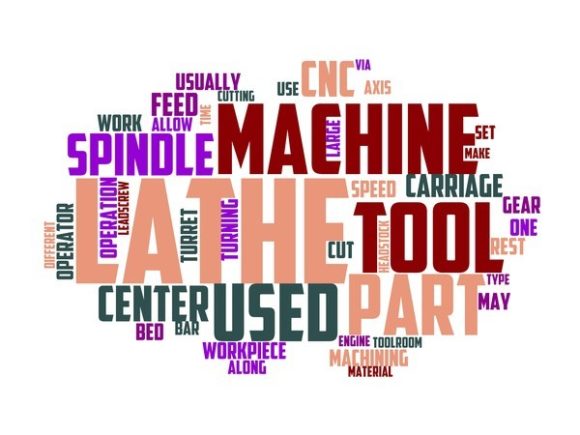
Lathe Operator Typography Sublimation: Where Precision Craft Meets Expressive Design
In today’s rapidly evolving creative economy, the line between industrial skill and artistic expression continues to blur — and few intersections illustrate this shift more vividly than Lathe Operator Typography Sublimation. More than a niche technique, it represents a powerful convergence of machining heritage, typographic artistry, and modern digital fabrication. At its core, Lathe Operator Typography Sublimation is a design methodology that transforms the visual language of precision metalworking — think engraved tooling marks, CNC path patterns, lathe-turned letterforms, and machinist-inspired glyphs — into vibrant, sublimation-ready artwork. It’s not just about aesthetics; it’s about embedding narrative, authenticity, and craftsmanship into every printable surface.
What Exactly Is Lathe Operator Typography Sublimation?
Lathe Operator Typography Sublimation begins with intentional typographic design rooted in real-world manufacturing vocabulary. Rather than using generic fonts or abstract shapes, designers draw inspiration from the physical traces left by lathes: concentric grooves, tapering chamfers, thread-cutting rhythms, and the subtle imperfections of hand-turned metal. These elements are translated into hand-drawn, vector-based letterforms — often stylized as bold, dimensional, or rhythmically staggered — then optimized for sublimation printing. Sublimation, in turn, allows these designs to bond permanently with polyester fabrics, ceramic mugs, aluminum blanks, and other coated substrates through heat and pressure.
Unlike standard screen-printed or vinyl-cut graphics, sublimated Lathe Operator Typography retains fine detail, gradient depth, and edge-to-edge color fidelity — making it ideal for high-touch applications like apparel, home décor, and promotional merchandise. The result? A tactile sense of authenticity paired with crisp, scalable reproduction — a rare balance in mass-customizable design.
A Creative Response to Shifting Consumer Expectations
Today’s buyers — whether end consumers or B2B clients — increasingly value products that tell a story. They seek meaning behind the motif: Who made it? What process was involved? What values does it reflect? This cultural pivot toward “process transparency” has elevated industrially inspired design from background motif to central narrative device. Lathe Operator Typography Sublimation taps directly into this ethos. It doesn’t mimic machinery; it honors it — transforming technical fluency into visual poetry.
Consider a small-batch apparel brand launching a collection titled “Made by Hand, Guided by Machine.” Using Lathe Operator Typography Sublimation on crewnecks and tote bags, they embed phrases like “True Runout,” “Center Drill First,” or “Feed Rate Matters” — terms instantly legible to machinists, yet intriguing and aesthetically grounded for general audiences. That duality — insider resonance paired with broad visual appeal — fuels shareability, brand loyalty, and cross-community engagement.
Bridging Gaps Across Industries and Workflows
The versatility of Lathe Operator Typography Sublimation lies not only in its aesthetic but in its functional adaptability across professional domains:
- For entrepreneurs and makers: It enables rapid differentiation in saturated markets — especially within craft-based e-commerce (Etsy, Shopify), where product storytelling directly impacts conversion. A notebook cover featuring hand-drawn “RPM,” “TPI,” and “G-code” in warm, watercolor-infused typography stands out next to minimalist sans-serifs.
- For marketers and agencies: It offers an unexpected yet cohesive visual anchor for campaigns targeting skilled trades, engineering education, or STEM outreach. A recruitment banner for a community college’s advanced manufacturing program gains credibility and warmth when rendered in Lathe Operator Typography Sublimation — humanizing technical training without diluting its rigor.
- For textile and product designers: The wordcloud format — rich, colorful, and compositionally dynamic — serves as a ready-made asset for repeat patterns on fabric rolls, ceramic tile decals, or embroidered patches. Its organic density supports both full-coverage prints and strategic focal points (e.g., centered on a pillow or wrapped around a tumbler).
- For educators and institutions: It transforms learning materials into tactile tools. Imagine a set of classroom magnets labeled “Chuck,” “Tailstock,” “Spindle Speed,” or “Parting Tool” — each shaped and shaded like actual lathe components — reinforcing terminology through visual and kinesthetic association.
Why Now? Timing, Tools, and Cultural Momentum
Three converging forces have accelerated adoption of Lathe Operator Typography Sublimation:
- Digital democratization: Affordable sublimation printers (like those from Sawgrass or Epson), cloud-based design platforms (Adobe Express, Canva Pro), and open-source vector libraries have lowered entry barriers. Designers no longer need industrial-grade equipment to prototype or produce at scale.
- Renaissance of craft literacy: Platforms like TikTok and Instagram have spotlighted machining, welding, and CNC work — normalizing technical vocations and cultivating admiration for manual expertise. Audiences now recognize and appreciate the nuance in a perfectly turned shoulder or a clean thread finish — and want to wear, display, or gift that appreciation.
- Sustainability-aligned production: Sublimation uses dye-based inks that bond at the molecular level, eliminating water waste and reducing volatile organic compound (VOC) emissions compared to traditional printing methods. When paired with recycled polyester fabrics or eco-coated ceramics, Lathe Operator Typography Sublimation aligns with growing expectations for responsible manufacturing — without compromising vibrancy or durability.
Practical Integration: Beyond Decoration to Strategic Expression
Successful implementation goes beyond dropping a wordcloud onto a template. It requires contextual intentionality. For example:
- A maker-space membership card might feature Lathe Operator Typography Sublimation with embedded icons — a miniature chuck, a caliper, a lathe bed — arranged as decorative ligatures within key words like “Measure,” “Turn,” “Finish.”
- An engineering conference swag bag could include sublimated notebooks where the cover design subtly mimics a lathe’s cross-slide movement — horizontal bands of color shifting in calibrated increments, with typography aligned to simulated feed paths.
- A home décor line might translate workshop terminology into aspirational mantras: “Hold Tolerance,” “True Alignment,” “Steady Feed” — rendered in soft pastel gradients on linen throw pillows, bridging workshop discipline with mindful living.
This isn’t novelty for novelty’s sake. It’s semantic layering — using form, function, and familiarity to deepen emotional resonance while maintaining professional integrity.
Looking Ahead: From Niche Technique to Design Language
Lathe Operator Typography Sublimation is evolving beyond a stylistic trend into a recognizable design language — one that communicates competence, care, and continuity between analog skill and digital output. As generative AI tools begin assisting with pattern iteration and variant generation, human designers remain essential in curating meaning: selecting which terms resonate culturally, how weight and spacing reflect mechanical tension, and when color harmony should evoke coolant mist, polished steel, or sunrise over a shop floor.
Its growth also signals a broader industry recalibration — away from “tech vs. trade” binaries and toward integrated literacies. Professionals who understand both G-code syntax and grid-based layout principles are uniquely positioned to lead in product development, brand strategy, and experiential design. Likewise, educators who embed Lathe Operator Typography Sublimation into curriculum aren’t just teaching software; they’re modeling how technical fluency becomes expressive fluency.
Whether you’re launching a new line of artisanal workshop apparel, designing a recruitment campaign for advanced manufacturing roles, or creating limited-edition sublimated journals for creative engineers, Lathe Operator Typography Sublimation offers more than visual distinction. It offers alignment — between process and product, precision and personality, legacy and innovation.
So get crafty — not just with tools, but with intention. Let every curve, every kern, every hue carry the quiet confidence of the lathe operator: steady, exact, and unforgettably human.