Kerbala Typography Print
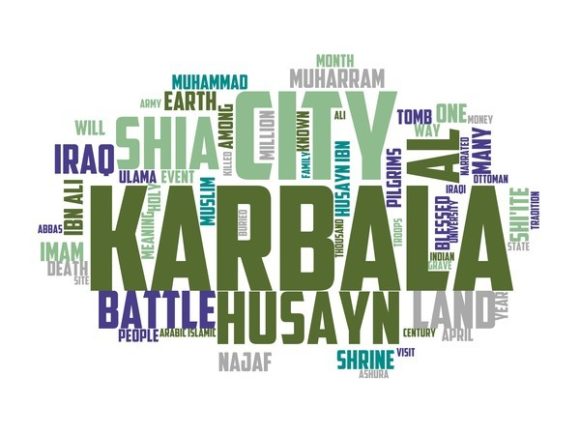
Kerbala Typography Print is a distinctive, hand-drawn wordcloud design rooted in expressive Arabic-inspired letterforms—vibrant, organic, and intentionally unstructured. Unlike algorithmically generated word clouds, it’s crafted by hand: each word flows into the next with deliberate spacing, weight variation, and chromatic harmony. Its purpose isn’t data visualization—it’s visual resonance. It’s designed to carry meaning through form, color, and rhythm—not frequency or hierarchy. That makes it uniquely suited for contexts where emotional tone, cultural nuance, and aesthetic cohesion matter more than statistical representation.
Think of Kerbala Typography Print not as a standalone graphic, but as a modular creative asset—one that bridges intention and execution across physical and digital workflows. Whether you’re launching a small-batch apparel line, designing a workshop handout, or developing a brand identity system, this wordcloud functions best when treated as a flexible component—not a finished piece.
How It Fits Into Real Creative Workflows
In practice, Kerbala Typography Print enters projects at multiple points—not just at the end. For product designers, it often appears early in mood board development: a visual anchor that conveys energy, warmth, or spiritual groundedness before color palettes or typography systems are locked in. For educators building lesson materials, it may be embedded into slide decks or printable reflection sheets *during* curriculum planning—its layered words acting as subtle prompts (e.g., “resilience,” “curiosity,” “clarity”) without requiring explicit instruction.
Marketers use it mid-campaign—not as a headline, but as background texture in social media carousels or email headers. Because it’s hand-drawn and colorful, it avoids the fatigue associated with overused stock graphics. Its irregularity signals authenticity; its density invites slow looking. That makes it effective for audiences who scroll past polished, templated visuals without pause.
Integration With Other Tools and Assets
Kerbala Typography Print works most effectively when paired deliberately—not layered haphazardly. For textile designers, it’s commonly vectorized and scaled to repeat seamlessly across fabric swatches using Adobe Illustrator’s pattern tools. In that context, compatibility hinges on file format: high-resolution PNGs with transparent backgrounds allow quick mockups in Canva or Figma, while editable SVGs support precise alignment with garment seams or embroidery stitch paths.
For publishers and authors, it often serves as a chapter divider or section header inside print-ready PDFs. Here, consistency matters: using the same version (same color variant, same orientation) across a 12-chapter e-book ensures visual rhythm without distraction. That requires organizing assets thoughtfully—naming files clearly (“kerbala-print-v3-teal-landscape.svg”, “kerbala-print-v3-saffron-portrait.png”) and storing them in a shared cloud folder with version notes.
When used alongside photography or illustration, Kerbala Typography Print benefits from intentional negative space. Placing it in the lower third of a poster—over a soft gradient or blurred background—lets the words breathe while anchoring the composition. Avoid stacking it over busy imagery; its strength lies in legibility *and* atmosphere, not visual competition.
Practical Implementation Tips for Diverse Use Cases
Clothing & Textile Design: Test scale rigorously. What reads beautifully at 12 inches wide on a tote bag may dissolve into indistinct color blobs at 3 inches on a cuff. Start with a mockup at actual size—print it out, hold it at arm’s length, then step back. If individual words vanish, simplify: choose one dominant phrase (“create boldly”) and use the full cloud as secondary texture elsewhere in the collection.
Promotional Materials (flyers, stickers, magnets): Prioritize contrast. The original hand-drawn palette is rich—but not all colors convert cleanly to CMYK or Pantone spot inks. If printing offset, run a physical proof first. For digital-first uses (Instagram ads, email banners), export multiple versions: one with deep navy background + light text variants, another with white background + saturated ink tones. This ensures accessibility and platform flexibility.
Home Décor & Stationery: Consider tactile translation. A pillow printed with Kerbala Typography Print gains depth when paired with embroidery or foil stamping on notebooks. That means selecting versions with clear word boundaries—not overly interwoven lines—so production vendors can separate layers cleanly. When sourcing from print-on-demand partners, upload both RGB and CMYK versions and specify bleed requirements upfront.
Preparation, Organization, and Long-Term Usability
Before deploying Kerbala Typography Print across multiple products, invest time in asset hygiene. Create a master folder with subfolders: /source-files (editable AI/SVG), /exports (PNG/JPG at common sizes: 2000px, 4000px, print-ready 300dpi), /color-variants (teal, terracotta, indigo, monochrome), and /usage-guidelines (a simple PDF noting minimum size, safe margins, and incompatible backgrounds). This pays dividends when onboarding freelancers or handing off to production teams.
Long-term usability also depends on licensing clarity. Verify whether your license permits commercial use across unlimited SKUs—or if apparel requires an add-on fee. Some creators assume “personal use” covers small-batch sales until they hit platform takedowns. Read the terms. When in doubt, contact the designer directly. Most independent typographers respond quickly—and many offer custom color matching or layout tweaks for committed users.
Consistency doesn’t mean repetition. Rotate variants seasonally: use warm-toned clouds for spring launches, cooler palettes for autumn collections. Or align word selection with campaign themes—swap “joy” and “light” for “focus” and “depth” when shifting from wellness branding to productivity tools. That keeps the asset feeling fresh without redesigning from scratch.
Why It Works Where Other Graphics Fall Short
Digital fatigue is real. Users scroll past identical sans-serif quotes and minimalist icons daily. Kerbala Typography Print interrupts that monotony—not through loudness, but through craft. Its slight imperfections signal human input. Its color transitions mimic natural pigment blending, not flat digital fills. That builds subconscious trust, especially among audiences valuing mindfulness, heritage, or artisanal quality.
It also scales functionally across formats most vector-based art struggles with: tiny enamel pins (where fine detail blurs), large-scale wall decals (where repetition must feel intentional, not mechanical), and woven jacquard tags (where thread count limits line complexity). Because it’s built on gesture rather than geometry, it adapts—without needing constant reworking.
Finally, it supports narrative layering. A teacher might use the same Kerbala Typography Print across a year-long course—first as a welcome slide, later as a reflection prompt, finally as a graduation certificate border. The visual thread becomes part of the learning arc. That kind of continuity isn’t possible with disposable clipart. It requires intention—and rewards it.
So treat Kerbala Typography Print as a working partner in your process—not just decoration. Place it early to set tone. Revisit it mid-project to check alignment with core values. Refine it late-stage to ensure technical readiness. And when sharing it with others—whether clients, students, or collaborators—name what it carries: not just words, but weight, warmth, and quiet intention.