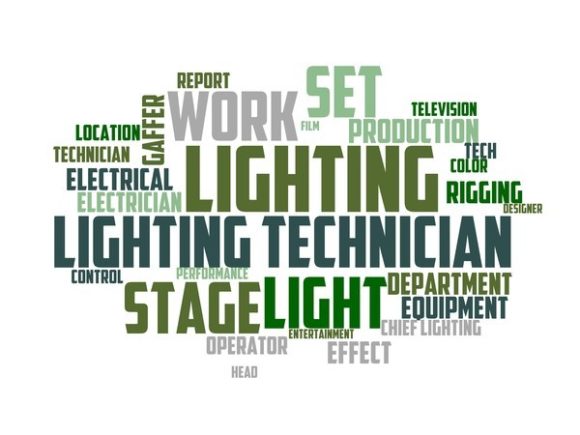
Lighting Technician Typography Crafting
Lighting Technician Typography Crafting refers to a specialized visual design approach that merges technical precision—often associated with stage, film, or architectural lighting—with expressive, hand-drawn typographic art. Unlike standard digital fonts or generic script styles, this craft emphasizes intentional line weight variation, dynamic contrast, and organic rhythm inspired by how light interacts with form: highlights, shadows, gradients, and directional emphasis all inform letter structure and spacing. The result is typography that feels both grounded in real-world physics and richly human—drawn by hand, yet purposeful in its illumination logic.
What Sets It Apart From Other Typographic Styles
Most decorative typography falls into one of three broad categories: geometric (clean, uniform, digitally precise), calligraphic (fluid, pressure-sensitive, historically rooted), or illustrative (letterforms embedded with icons, textures, or narrative elements). Lighting Technician Typography Crafting occupies a narrower niche—one where the letter’s shape responds not just to pen angle or cultural reference, but to imagined light sources. A capital “A” might taper sharply on one side to suggest a focused spotlight, while its crossbar glows subtly where ambient fill light would hit. Serifs may appear as cast shadows; negative space becomes a deliberate highlight zone.
This differs meaningfully from hand-lettered quotes sold as clipart or SVG bundles—those often prioritize charm over structural intention. It also diverges from motion graphics typography, where light effects are simulated via software layers rather than built into the drawing itself. In Lighting Technician Typography Crafting, luminance isn’t added later—it’s designed in from the first stroke.
Practical Applications Across Physical and Digital Media
The hand-drawn, colorful wordcloud described—featuring layered, interwoven words like “inspire,” “create,” “glow,” “focus,” “balance,” and “illuminate”—isn’t merely decorative. Its construction supports real-world versatility because each element respects scale, contrast, and color separation needed for reproduction. That means it translates reliably across contexts where fidelity matters:
- Textiles: Screen-printed onto cotton tees or woven into linen pillow covers without losing legibility at 8–12 inch widths;
- Printed goods: Works cleanly on kraft paper tags, matte-finish notebooks, or foil-stamped business cards due to intentional color blocking and edge clarity;
- Digital use: Scales well in email headers, e-book chapter openers, or social banners because strokes were drawn with vector-ready consistency—not traced from low-res scans;
- Mixed media: Functions as a base layer under embroidery, resin pours, or collage without competing visually, thanks to balanced positive/negative space ratios.
Unlike generative AI typography tools—which often produce unpredictable kerning or inconsistent stroke behavior—this style relies on manual craftsmanship calibrated for output integrity. That makes it especially valuable when consistency across formats is non-negotiable, such as branded merchandise lines or conference materials.
When It Fits—and When It Doesn’t
Lighting Technician Typography Crafting shines in projects where atmosphere, intentionality, and tactile authenticity matter more than speed or infinite customization. Consider it if you’re developing:
- A theater company’s season brochure, where typography should echo the mood of dimmed houselights and focused stage beams;
- An interior designer’s client presentation deck, where headings need to evoke spatial awareness and layered lighting schemes;
- A maker’s limited-run apparel line centered on creativity, craft, and technical artistry—not mass-market appeal.
It’s less suited for high-volume, rapid-turnaround needs—like daily social posts requiring dozens of variants—or contexts demanding strict brand font licensing compliance (e.g., corporate identity systems built around proprietary typefaces). It also assumes some tolerance for subtle irregularity: letters won’t align pixel-perfectly in every application, nor should they. That’s part of the aesthetic contract.
Comparing Approaches: Crafted vs. Automated vs. Traditional
Choosing among typographic resources involves weighing time, control, scalability, and expressive range. Here’s how Lighting Technician Typography Crafting fits alongside alternatives:
- Custom hand-lettering commissions: Offer full uniqueness and direct collaboration, but require weeks of back-and-forth and higher investment. Lighting Technician Typography Crafting provides a middle ground—handmade integrity with broader reuse rights and immediate access.
- Font-based solutions (OTF/TTF): Excel at text-heavy layouts and global style changes (e.g., switching weights or language support), but lack the singular, scene-specific nuance of lighting-informed forms. You can’t replicate the shadow fall on an “S” curve using standard font features alone.
- AI-generated text art: Delivers novelty quickly but often sacrifices readability at small sizes, introduces unintended visual noise, and rarely accounts for print production constraints like ink spread or fabric weave. Lighting Technician Typography Crafting is pre-optimized for those realities.
No single option dominates. If your goal is to reinforce a theme of thoughtful illumination across multiple touchpoints—without rebuilding from scratch each time—this style delivers cohesion others struggle to match.
Realistic Use Case Examples
A university’s Department of Performing Arts used a Lighting Technician Typography Crafting wordcloud as the central motif for their annual student showcase. Printed large-scale on vinyl banners and reduced to 2-inch embroidery on crewneck sweatshirts, the same composition held up across substrates—its bold outlines prevented bleeding on knit fabric, while its warm, saturated palette translated faithfully to both dye-sublimation mugs and offset posters.
Conversely, a wellness coach launching a digital course opted against it for email subject lines. Though visually aligned with her “inner light” messaging, the hand-drawn nature made character spacing inconsistent across mobile clients. She instead licensed a complementary sans-serif with custom ligatures—keeping the spirit without compromising function.
These examples underscore a key point: fit depends on context, not just preference. Lighting Technician Typography Crafting adds meaning through method—but only when the method serves the medium.
Key Decision Factors to Weigh
Before selecting or commissioning work in this style, consider these practical questions:
- How many distinct output formats will you use? If more than four (e.g., web, print, embroidery, vinyl, resin), verify the files include layered, labeled, and resolution-appropriate versions.
- Do you need multilingual support? Hand-drawn wordclouds are typically English-only unless explicitly extended. Adding diacritics or non-Latin scripts requires additional illustration time and expertise.
- What’s your revision tolerance? Since each element is drawn—not algorithmically generated—major layout shifts (e.g., swapping primary words or rotating orientation) may involve redraws, not simple edits.
- Is scalability a priority? Ensure the source files are delivered in vector format (AI or EPS) with editable layers—not flattened PNGs—even if raster previews are included for quick review.
Lighting Technician Typography Crafting rewards attention to those details. It doesn’t replace other typographic tools; it complements them where depth, intention, and physical-world resonance matter most.